
Note
Dignity first
The whole point is that nobody else notices. A highlighted screen at the table would fail this.
Can buildings explain how they use energy?
Research project — The Guest Understanding Platform
Project Lumen explores how restaurants and hotels can quietly personalise dining experiences while reducing confusion, improving accessibility and supporting staff.
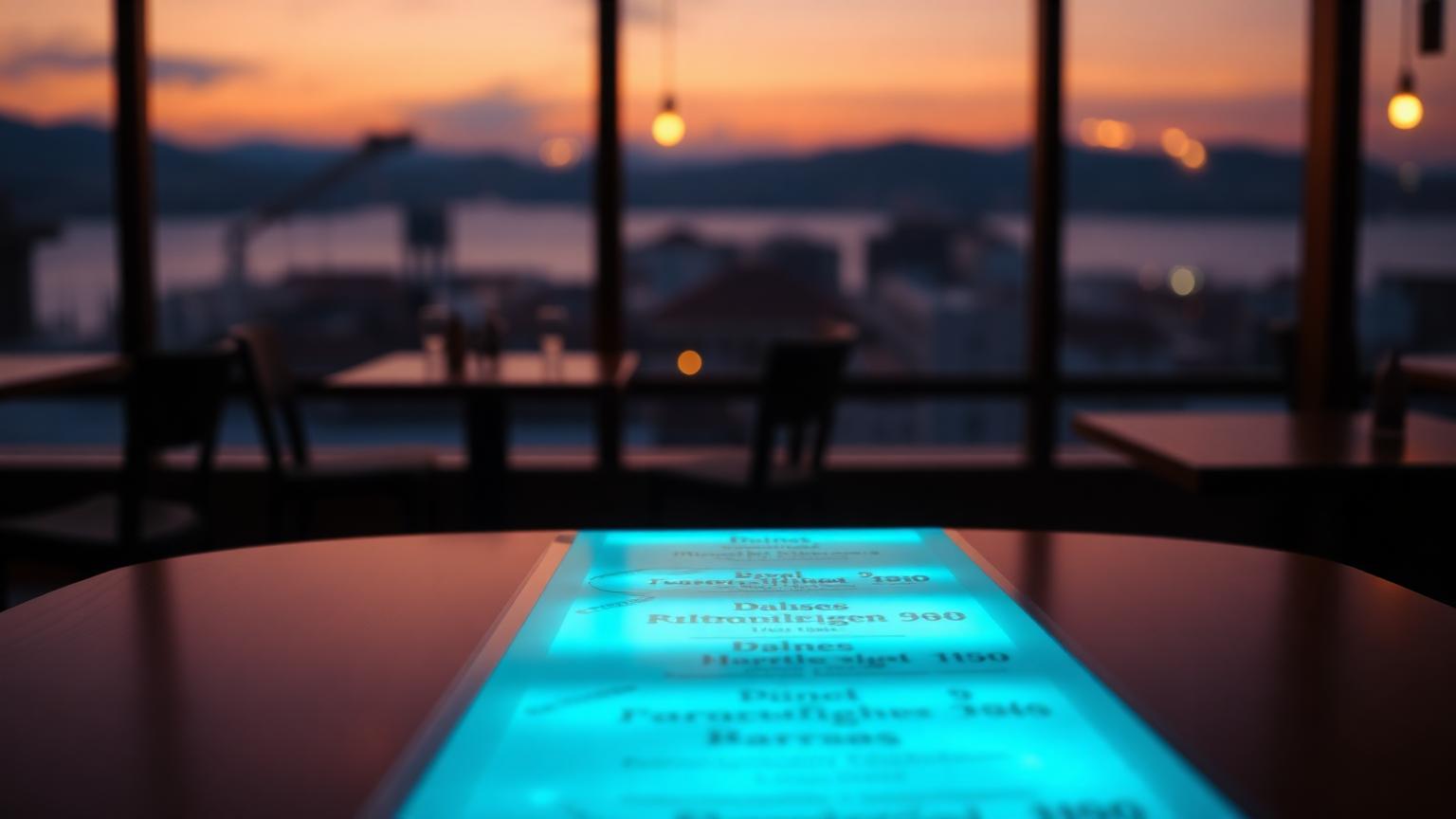
The guest understanding platform.
ResearchPositioning
Lumen helps hospitality understand every guest before the first order is placed. Food becomes personalised. Hospitality becomes calmer.
What if hospitality understood the guest before the first order was placed?
This is not another digital menu. Digital allergen menus, QR menus and filtering already exist. The unsolved problem is understanding: knowing what a guest needs — allergy, lifestyle, accessibility, family, wellness, language — and quietly shaping the room, the kitchen and the service around it.
The guest journey
Guest sits down
Scans QR / NFC / table
Chooses profile
Lumen adapts
Kitchen informed
Confident ordering
Better hospitality
Guest profiles
Allergens are one profile among many.
Unsafe dishes hidden, not footnoted.
Alternatives explained, not refused.
Belief and choice treated equally.
Support without announcement.
One table, several versions.
Guidance, never scoring.
The small things staff remember.
Demonstration
Lactose intolerant. Late dinner. Hotel restaurant.
At the table
This table can safely enjoy 6 dishes.
2 adapted · 2 hidden
Dairy dishes hidden or shown with a stated substitution. Order placed without a single question to the floor.
Lumen intelligence
This guest can safely enjoy 27 dishes.
Staff experience
Table 8
Kitchen can prepare safely. Simple. Professional.
Guest Understanding
No personal health information is displayed. Patterns only.
Most requested allergens
Dairy, gluten, peanut
Most requested modifications
Sauce separate
Common substitutions
Oat milk, GF bread
Popular dishes
Sea bass, flatbread
Accessibility usage
9% of covers
Language usage
6 languages nightly
Ask Before You Order
Not a chatbot. One button, a short list of real questions.
The restaurant answers once. Where appropriate, that answer becomes available to future guests.
Accessibility
Accessibility should be invisible, never separate.
Sustainability
Shown quietly, only when relevant.
Research questions
Can menus reduce staff interruptions?
Can guests order with greater confidence?
Can restaurants become more inclusive?
Can accessibility become invisible?
Can food quietly explain itself?
Research areas
Knowing what a table needs before service begins.
Voice, visual and simplified experiences that never single anyone out.
Ingredients explained in plain English.
Fewer repeated questions, clearer tickets, safer preparation.
Accurate information held across changing menus and shifts.
How hotel and restaurant dining evolves over the next decade.
Future research
Can menus adapt to…
Enterprise
Lumen Platform. Built to connect, not to replace.
Research status
Can hospitality understand every guest before the first order is placed?
Future possibilities
Exploratory ideas, not claims about existing capabilities.
Quinn Labs doesn't build products because technology exists.
We explore difficult questions.
Sometimes the answer becomes a company.
Sometimes it changes an industry.
Every project begins with one question.
What if?
Research question
“Can hospitality understand every guest before the first order is placed?”
Why this matters
Dietary needs, accessibility and language are awkward conversations repeated at every meal, in front of everyone at the table.
Current progress
Research — concept experience only, nothing served to a real table.
Workflow
Research
Dietary information is an awkward conversation, repeated every single meal.
How it could work
Problem
Every individual adapts to the menu. The menu never adapts to them.
Current world
Small print, allergen folders, and a question asked in front of everyone at the table.
Quinn Labs idea
A menu that highlights what works and fades what doesn't, personally and without announcement.
Potential future
Kitchens that see demand patterns and cook less of what nobody can eat.
Research board
The whole point is that nobody else notices. A highlighted screen at the table would fail this.
Natasha's Law changed labelling. It didn't change the conversation at the table.
Open questions
Liability
Who is responsible if an adapted menu is wrong? Until that is clear, it stays research.
Future possibilities
Research directions only. None of these exist, and some never will.
Questions we're asking
Potential collaborators
Related projects
Research
Project Reserve
A resilience layer for when payments stop.
Research
Project Chronicle
A living record of a professional life.
Research
Project AutoDock
Making EV charging disappear.
Prototype
Project Echo
What if every machine knew what it was supposed to sound like?
Question
Project Grace
Technology that makes people slightly more human.
We prototype possibilities. Not every question has an answer. Every answer begins with a question.